
FBI agents raid an election office over baseless claims of voter fraud. A federal appointee refuses to accept the results of a recent presidential election. Officials threaten to purge tens of thousands of people from voter rolls without explanation. If this sounds like the conduct of an authoritarian regime because it is — and it’s happening right here in the U.S.
Free and fair elections are the hallmark of a healthy democracy — but since retaking office, President Trump has doubled down on anti-democratic attacks that disproportionately harm voters of color.
As the nation’s fastest growing group of eligible voters, Asian Americans and Pacific Islanders (AAPIs) have a lot to lose from Trump’s ongoing assault on our voting rights. Trump and his allies in Congress know that their power is held by a narrow margin and that’s why he’s doing everything he can to make voting harder just months before the 2026 midterm elections.
Keep reading for more on the attacks on our voting rights, what is at stake for AAPI voters in the midterm elections, and what we can do, together, to protect our right to vote.
About AAPI voters
Of the 27 million Asian Americans and Pacific Islanders who call the United States home, 16 million of us are eligible to vote in the upcoming midterm elections, making AAPI voters the nation’s fastest-growing racial voting bloc.
As our population continues to grow, so does our political influence. AAPI voter turnout has soared in recent years. In 2024, almost 58% (8.3 million) of eligible AAPI voters cast a vote in the general elections — outperforming not just in immigrant-rich communities like California and New York, but across the country.
Who are AAPI voters?
Where we come from: Most Asian Americans and Pacific Islanders were born outside of the U.S. Of the 3 million immigrants who received their U.S. citizenship from 2020 through 2024, over one-third were AAPI — more than any other racial group.
What we care about: AAPI adults see cost of living and inflation (58%) as the most important political issue, followed by foreign affairs (46%), jobs and the economy (34%), healthcare (30%), and immigration (23%).
Who we support: In election after election throughout 2025, AAPI voters in California, New Jersey, New York, and Virginia turned out in support of anti-Trump candidates and ballot measures.
How we’re represented: Mayor Zohran Mamdani in New York City, Supervisor Connie Chan in San Francisco, State Assemblymember Francesca Hong in Wisconsin, Lieutenant Governor Ghazala Hashmi in Virginia, and State Representative Gene Wu in Texas are a part of the growing field of AAPI political candidates and elected officials who are reshaping the face of U.S. politics.
In battleground states like Arizona, Georgia, Nevada, North Carolina and Pennsylvania, AAPI turnout exceeded the margin of victory in both the 2020 and 2024 general elections. Looking ahead at the 2026 midterm elections, one thing is certain: candidates who take AAPI voters seriously have a better shot at winning, and those who don’t run the risk of falling behind.
Recent polling suggests that President Trump and his allies have reason to be concerned. 72% of AAPI Democrats, Republicans, and Independents disapprove of his job performance.
During his first year in office, Trump lost ground with AAPI adults on both his immigration and economic agenda. AAPI voters also disapprove of current spending priorities. The vast majority of AAPI adults think the current administration spends too much on military and defense (69%) and immigration enforcement (72%), and too little on healthcare (68%) and education (70%).
At the same time, AAPI adults trust Democrats over Republicans on cost of living, healthcare, immigration, and foreign affairs.
It’s not a coincidence that while AAPI voters are turning against Trump’s leadership and policies, Trump is launching an attack on our voting rights.
Growing attacks on our voting rights
From demanding access to state registered voter rolls that contain sensitive voter data, to pushing policies that would make it harder to vote by mail, Trump and his political allies show no signs of stopping their attacks on our right to vote.
1. Erecting barriers to vote by mail
Election Day is on a Tuesday, when most of us are at work. Mail-in voting gives people a flexible, convenient, and accessible way to participate in the democratic process. Since the COVID-19 pandemic, a growing number of states and cities have adopted mail-in-voting policies, and to great effect. Research shows states like California that automatically mail ballots to all registered voters experience a 3-4% increase in voter turnout — which in some cases, is enough to change the results of an election.
This is especially true for Asian American voters, who vote by mail at a higher rate than any other racial group — in large part because mail-in ballots are often translated into multiple languages.

The popularity of mail-in voting likely makes it a target for Trump. Citing false claims of voter fraud, President Trump has issued two executive orders restricting access to mail-in-voting.
And that’s not all. Following Trump’s executive orders, the United States Postal Service (USPS) proposed a federal takeover of mail-in voting, in which states must hand over sensitive voter data — such as, names, addresses, and ballot tracking barcodes — before sending ballots through the mail. This raises serious concerns about voter suppression and data security.
Following Trump’s lead to limit mail-in voting, Republican officials have pushed the issue even further. In Watson v. RNC, they challenged a Mississippi law that allows mail-in ballots sent and postmarked by Election Day to be counted, as long as they are received within five business days.
In a narrow 5-4 decision in June, the Supreme Court upheld Mississippi’s law — a victory for the close to half of AAPI voters who count on mail-in voting. And while federal courts have stopped the USPS rule, along with the worst of Trump’s executive orders, from taking effect, the fight to protect voting rights isn’t over. President Trump is calling on the Supreme Court to weigh in on his executive orders — prompting condemnation and outrage from civil rights groups like Stop AAPI Hate.
2. Adding “proof of citizenship” requirements
In addition to his assault on mail-in voting, President Trump has thrown his weight behind the deceptively named SAVE Act, a dangerous voter suppression bill that threatens to disenfranchise tens of millions of eligible voters.
The dangerous implications of the SAVE Act
- Voter identification: People will be required to show photo documentation when registering to vote — e.g., a U.S. passport, which 47% of Americans don’t actually have.
- In-person registration: Gone are the days of automatic or online voter registration. People will have to report in person to their local election office for proof of citizenship verification — a step that will lock millions out of the democratic process.
- Voter purges: States will be forced to purge their voter rolls of “noncitizen voters” in a process that will most likely disqualify eligible voters from casting their ballots due to their high rates of inaccuracy.
AAPI voters have a lot to lose here. Many of us are naturalized citizens whose legal names don’t match the ones on our official documents — which is just the kind of mismatch that citizenship-verification systems will often flag as voter fraud. The same systems could also disenfranchise married people who took their spouse’s last name and don’t have a birth certificate that reflects their current legal name.
AAPI voters also struggle with language access and depend on mail-in voting policies to deliver ballots in their preferred language. It’s clear that legislation like the SAVE Act are not designed to protect but to disenfranchise communities like ours.
3. Carving up the Voting Rights Act
The Voting Rights Act of 1965 was built on a simple promise: that every eligible voter should have the right and the opportunity to cast their vote. Fought for and won by Black civil rights activists, the Voting Rights Act is often considered the most effective tool we have to protect voting rights — and this spring, the Supreme Court hollowed it out.
In Louisiana v. Callais, the Court ruled that it isn’t enough to prove that a voting map has a discriminatory impact. Voters now also have to prove discriminatory intent. According to the Court, it doesn’t matter that voter discrimination happens off the record in backroom deals. As long as they can pass it off as unintentional or as the result of partisan gerrymandering — which the Court ruled legal in 2019 — lawmakers essentially have the right to create voting districts that disenfranchise communities of color.
While civil rights advocates sounded the alarm, President Trump celebrated the Court’s decision on social media. He called on Republican lawmakers to seize the chance to cancel upcoming elections and redraw maps to give Republican candidates the edge.
This decision deals the most devastating blow to Black and Latino communities — but AAPI voters also have cause for concern. As a result of Louisiana v. Callais, future election officials may have free rein to dilute AAPI political influence by dividing our communities into multiple voting districts.
The ruling could also invite attacks on the surviving pillars of the Voting Rights Act such as Section 203, which requires jurisdictions with significant non-English speaking populations to provide in-language voting materials, including ballots. It’s because of Section 203, for example, that Asian American voters in Los Angeles County can receive ballots in Cambodian, Chinese, Korean, Tagalog, and Vietnamese – and that those in Ramsey County, Minnesota can get ballots in Hmong.
This isn’t just a technicality. Remember, 70% of Asian Americans and Pacific Islanders speak a language other than English at home. For our communities, language access can mean the difference between casting your vote and staying at home.
Fearmongering about voter fraud and foreign interference
Trump’s recent primetime address to the nation in July continues a years-long pattern of sowing distrust in our election systems and denying the outcome of free and fair elections. His false claims of widespread voter fraud from alleged voters that are not citizens, and “rigged” elections have been debunked time and time again. His other false allegation — that China interfered with the 2020 presidential election — has also been disproven.
The link between anti-China rhetoric and anti-Asian hate
Trump’s claims of Chinese interference in our elections is anti-Asian scapegoating. It does more than just misinform — it also spreads racist and anti-immigrant stereotypes.
1 in 5 Americans consider Chinese Americans a threat to U.S. society. 1 in 4 believe Asian Americans are “more loyal” to their home countries than the U.S.
This kind of anti-Asian sentiment goes on to fuel anti-Asian hate: Half of AA/PI adults experienced a hate act in 2025 while one-third of AA/PI adults said they or someone close to them had their immigration status questioned or were concerned it would be.
This kind of political disinformation is designed to erode Americans’ confidence in our elections and set the stage to deny election outcomes that Trump does not like. Such conduct is typical of authoritarian leaders who want to seize power for themselves — even at the expense of everyday people.
What we can do to protect our democracy
📋
Check your voter registration or vote-by-mail status and make a plan to vote.
Make sure your voter registration status is active and your address is up to date ahead of your state’s voting deadlines. If you’re registered to vote by mail, remember to put in your ballot request.
If you’re registered to vote, make a plan for how and when you’re going to do it. That could mean requesting time off to go to the polls or setting a reminder to take your ballot to the post office.
If you’re mailing in your ballot, do it as early as possible. If your vote is not post-marked by Election Day, it will not be counted.
📚
Counter conspiracy narratives about election fraud.
Widespread election fraud has been consistently debunked, but the narrative pushed by Trump and his allies remains pervasive. Affirming our faith in the outcome of free and fair elections, where every eligible American can access their right to vote, will be important to ensure election outcomes are respected in November.
📞
Call your legislators to expand voter protections at the state level.
State-level voting rights legislation can help beat back federal attacks on the Voting Rights Act. For example, in California, lawmakers are fighting to expand the California Voting Rights Act and strengthen language access protections. Call your legislators in any state to ask them to champion related efforts.
💬
Educate your friends and family about what is at stake – and what to watch out for.
Share this post with your friends and family to keep them informed about what’s at stake in the November elections. Talk to them about the topics you care about and the ballot initiatives that are important to you.
Our vote matters
The attacks on our right to vote aren’t happening in isolation — they’re part of a broader pattern designed to silence AAPI voices right as our political power is growing. From restricting mail-in voting to hollowing out the Voting Rights Act, the Trump administration is sending a clear message: our vote is a threat to their political agenda — and they will do whatever they can to take it from us.
With the 2026 midterms fast approaching, the question isn’t whether our vote matters, it’s whether we’ll use it.
Learn More
Voter Education Resources
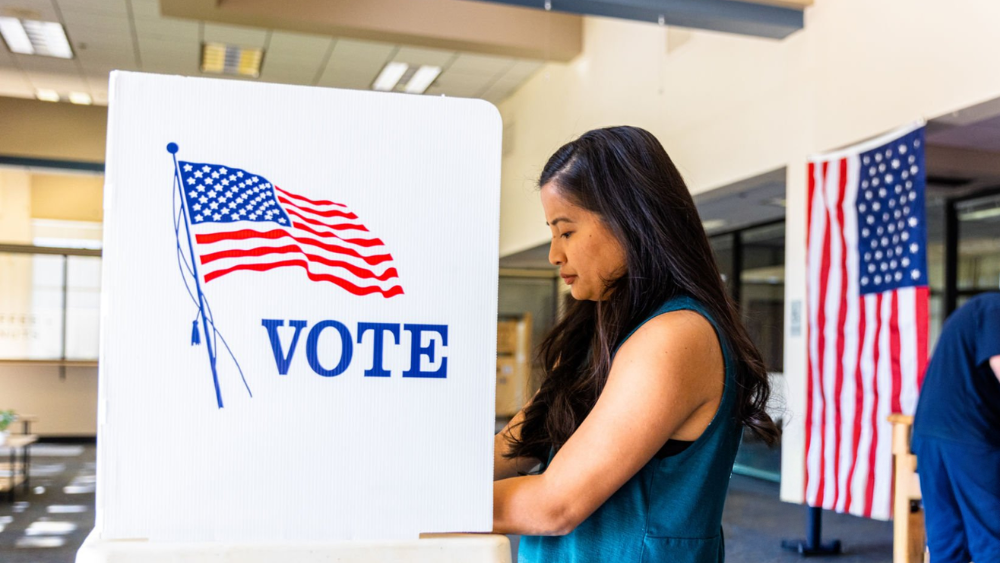
This AAPI voter guide includes multilingual know-your-rights info, voting hotlines, and guidelines for countering misinformation and disinformation before the next election.
Get Involved
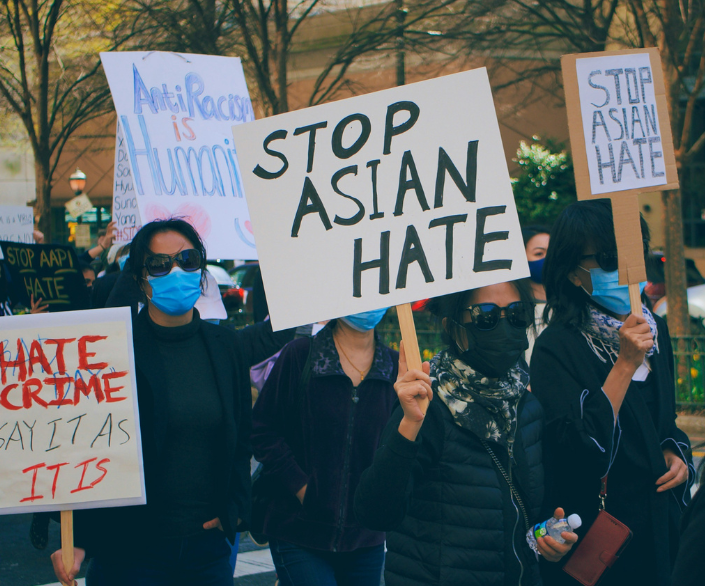
You can get started by checking our curated list of actions from Stop AAPI Hate and allied organizations.

How Trump is Rolling Back Voting Rights and Threatening the AAPI Vote