

October 2026

Anti-immigrant sentiment is showing up in a growing number of anti-Asian hate acts, as Trump continues attacks on immigrants of color.
This report exposes the growing presence of anti-immigrant sentiment in anti-Asian hate acts from January 2023 through June 2026 and illustrates how xenophobic political rhetoric and policies embolden people to commit acts of racism and discrimination against Asian people in the U.S.
Download Resources
Amid growing anti-immigrant sentiment, an interaction that once ended with a racial slur may now end with a threat to call ICE.
Anti-Asian hate didn’t end when the COVID-19 pandemic faded from headlines. It changed shape. During the pandemic, offenders often blamed Asian people for spreading the virus. Today, hate acts reported to Stop AAPI Hate increasingly echo the anti-immigrant rhetoric and policies of the second Trump administration. People are told to “go back where they came from,” called “spies” and “invaders,” and threatened with deportation.
This hits Asian American communities especially hard. About 65% of Asian people in the U.S. are immigrants, the highest share of any major racial group. Asian Americans have long been treated as perpetual foreigners, no matter how long they’ve lived here or whether they were born here.
In “License to Hate: Anti-Asian Racism in an Era of Anti-Immigrant Politics,” we analyzed 1,825 anti-Asian hate acts reported to the Stop AAPI Hate reporting center between January 1, 2023 and June 30, 2026. Keep reading to see how anti-immigrant narratives show up in everyday acts of hate, and how political rhetoric, government policy, and individual hate acts reinforce one another in this anti-immigrant political climate.
Key Findings
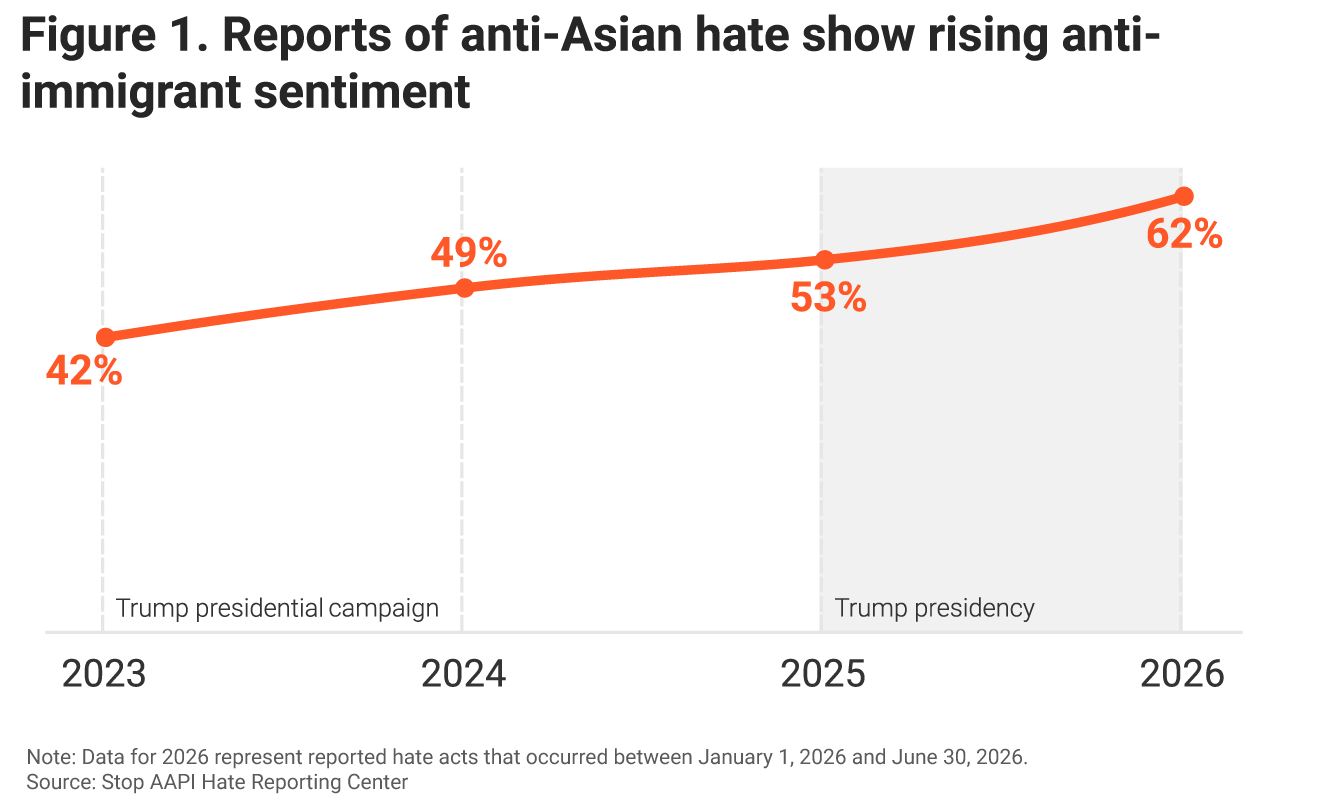
Anti-immigrant sentiment appeared in the majority (62%) of reported anti-Asian hate acts in the first half of 2026, up from 42% in 2023.
Anti-immigrant narratives have appeared in reports to Stop AAPI Hate since 2020, but they became more pronounced as anti-immigrant rhetoric and policies escalated during the second Trump administration. Today, offenders frequently use language that mirrors anti-immigrant political rhetoric and policies.
While walking to the train station, a man leaned towards my face and said, ‘I can’t wait until Trump gets reelected so you all can go back to where you came from.’
— Chinese woman in New York, 2024
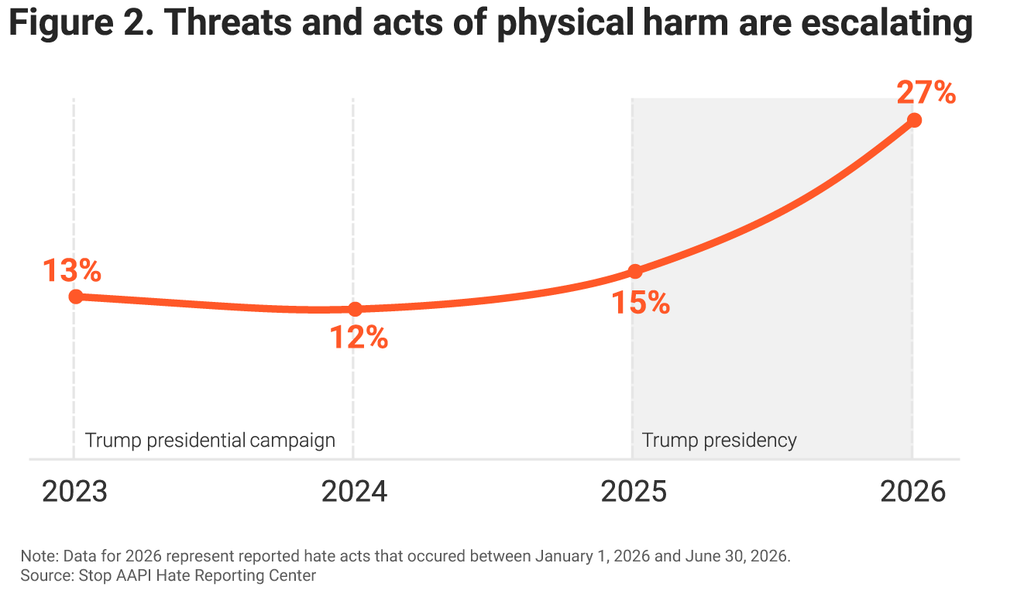
Among these reports, the share involving threats or acts of physical harm more than doubled.
Among reported anti-Asian hate acts involving anti-immigrant sentiment, the share that included explicit threats of or actual physical harm rose from 13% in 2023 to 27% in the first half of 2026.
A person asked me to apologize for coming here. Then he got louder and aggressive and it made me afraid. He kept shouting and in the end asked me to leave the country and never come back or he would break my glasses and nose.
— Indian man in Eastern U.S., 2026
Four recurring anti-immigrant narratives emerged in reports of anti-Asian hate — exclusion being the most common.
- Exclusion: Casting Asian people as outsiders who don’t belong, such as telling them to “go back to China” or mocking their accents.
- Dehumanization: Portraying Asian people as less than human, such as calling them “garbage” or comparing them to animals.
- Societal threat: Framing Asian people as dangers to the nation or economy, such as calling them “spies” or blaming them for lost jobs.
- Immigration status policing: Subjecting Asian people to immigration-related scrutiny, such as calling them “illegal immigrants” or threatening to report them to ICE.
These narratives often appeared together in the same hate act report, with exclusion being the most common throughout the study period. Dehumanization stayed relatively steady, while societal threat and immigration status policing narratives rose in prominence from 2023 through the first half of 2026.
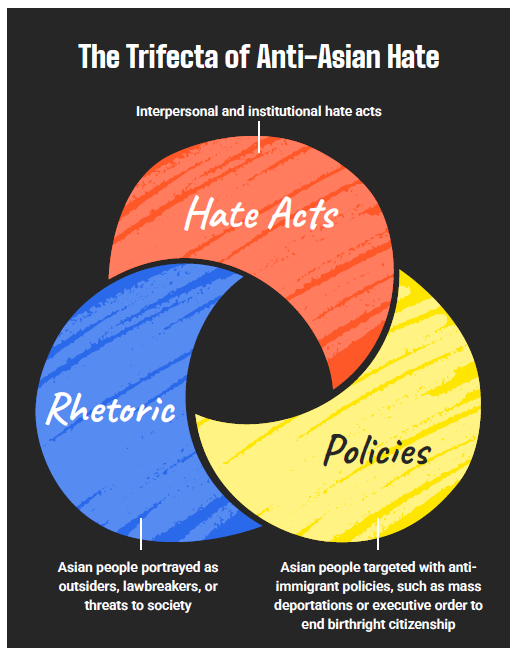
But hate acts don’t operate in isolation from political rhetoric and policies. Anti-immigrant rhetoric portrays immigrants as outsiders, lawbreakers, or threats. Those narratives help justify exclusionary policies. Together, they create conditions for people to harass and target Asian Americans, in what we call the trifecta of anti-Asian hate.
Offenders increasingly invoked state power to threaten and intimidate.
Among reports involving anti-immigrant sentiment, the share containing immigration status policing rose from 3% in 2023 to 13% in the first half of 2026. This includes questioning someone’s legal status, demanding proof of citizenship, or threatening to call ICE. The rise coincided with the administration’s escalating deportation campaign.
Immigration status policing goes a step further than other narratives because it carries the weight of state power. The consequences can include arrest, detention, and deportation, even for people who are U.S. citizens.
A car accelerated toward me at a pedestrian crossing, forcing me to step back to avoid being hit. He then confronted me while I called 911, saying, ‘Show me your green card. You are an illegal immigrant,’ and tried to grab my phone.
— Chinese woman in California, 2026
The shape of hate has shifted since the height of the pandemic – and under the Trump administration’s political agenda, xenophobia has increasingly become a driving force behind racism against Asian people in America. Anti-immigrant rhetoric and policies aren’t just the backdrop to these hate acts. They are anti-Asian hate in their own right, with serious consequences for communities that are often seen as foreign regardless of their immigration status.
What this tells us is that anti-immigrant hate and anti-Asian hate are deeply intertwined. And addressing them means doing more than responding to individual incidents. It means challenging the rhetoric, policies, and systems that make hate possible, and working together to build safer, more inclusive communities for Asian Americans and immigrants. For concrete steps policymakers and community organizations can take, see the recommendations in our report “Closing Doors, Widening Harm.”
Learn More

State of Anti-AA/PI Hate (2025)
Our third annual survey found that half of AA/PI adults experienced an act of hate during the first year of Trump’s second term.
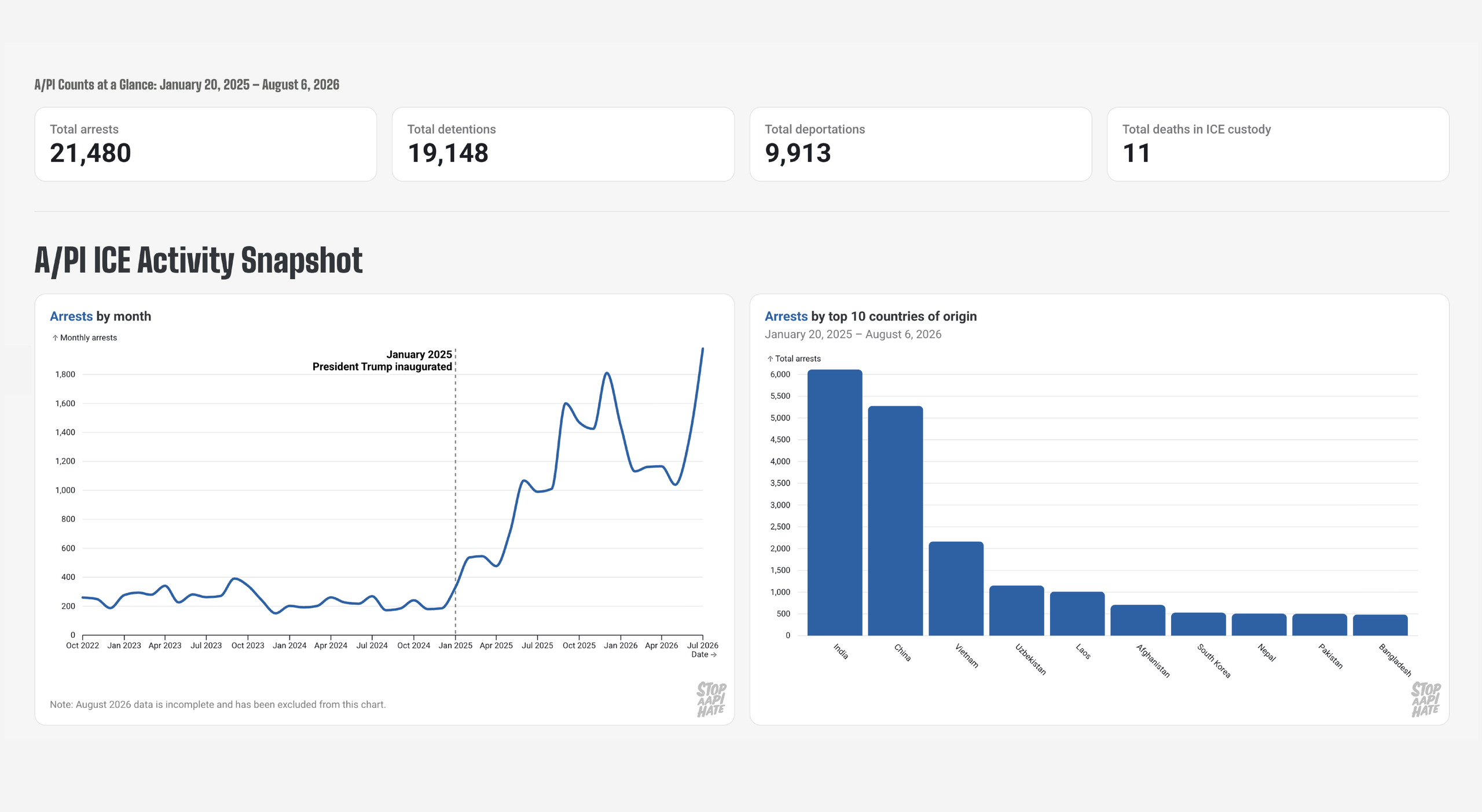
Asian and Pacific Islander ICE Tracker
This online data tool tracks ICE activity across 35 Asian and Pacific Islander countries of origin and 50 U.S. states and territories.
