
Stop AAPI Hate has received thousands of reports from everyday people who have experienced acts of racism, discrimination, and bigotry. Documenting this hate is critical – but we recognized the need to do more to help survivors heal and recover.
Hate can leave lasting impacts. In fact, 44% of Asian American and Pacific Islander (AA/PI) adults,who experienced hate reported negative effects on their health and 35% said it decreased their sense of belonging, according to our 2025 State of Hate Report. Hate can also be an isolating experience, with almost half (49%) reporting feelings of loneliness.
That’s why we created the HOPE program in 2024 – a safe space where survivors of hate acts can feel heard, supported, and empowered.
Giving communities a safe space to process trauma
HOPE (Healing Our People Through Engagement) is a free, non-clinical healing program that provides Asian Americans a safe and supportive space to share and process their experiences with racism.
HOPE is based on the Psychology of Radical Healing framework, which centers healing rather than coping alone. It draws on cultural roots, community connection, and collective action to make sense of racism and create change together. Here’s how it works:
- Recruitment: Stop AAPI Hate identifies a small cohort of AAPI adults who have personal experiences with racial bias.
- Programming: The cohort meets with trained facilitators, who guide them through short lessons, discussions, and group activities. Over the course of six sessions, HOPE participants:
- Build trust and share their own stories of racism
- Reflect on their families and cultural strengths
- Learn about racism and how it operates
- Practice self-care and collective action
- Envision what healing can look like
- Impact: For Asian Americans who have struggled to process their experiences with racism, the HOPE program can improve mental health and well-being, increase hope for a better future for our community, and increase sense of community and connection.
What is radical healing?
Radical healing is the idea that healing from racism goes beyond taking care of ourselves as individuals. It is also about recognizing how racism affects our lives and communities and finding ways to create change together.
The Psychology of Radical Healing framework was developed by the Psychology of Radical Healing Collective, a group of psychologists. Rooted in liberation psychology, Black psychology, ethnopolitical psychology, and intersectionality, the framework has informed approaches to mental health care, education, and community advocacy.
Put into practice, radical healing centers culture, community, and collective action while helping people move towards thriving, not just surviving.
Building confidence and strengthening connection
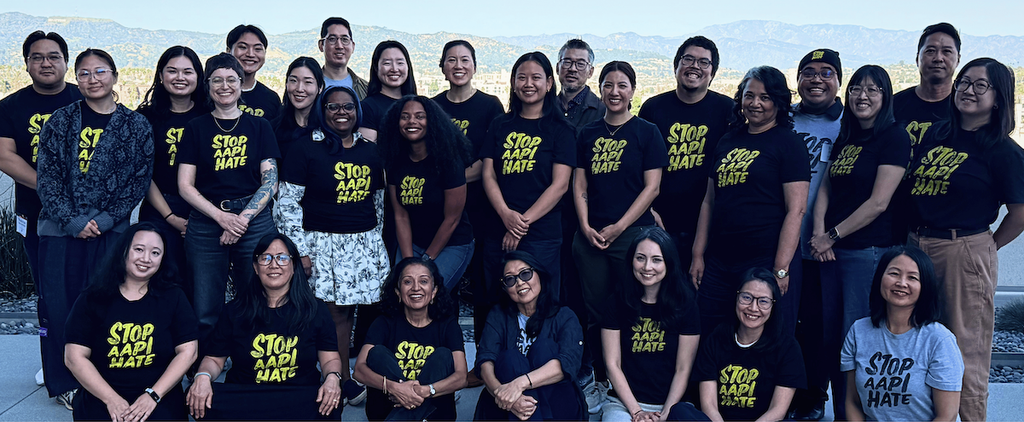
AAPI Equity Alliance — a founding organization of Stop AAPI Hate – developed and administered the HOPE program in 2024 and 2025. It started in Los Angeles, in partnership with Asian Pacific Counseling & Treatment Center, Koreatown Youth + Community Center, Little Tokyo Service Center, Pacific Asian Counseling Services, and Search to Involve Pilipino Americans.
Stop AAPI Hate also ran the HOPE program in the Bay Area and other parts of Southern California. Together, 91 Asian people took part across 12 groups, healing together.
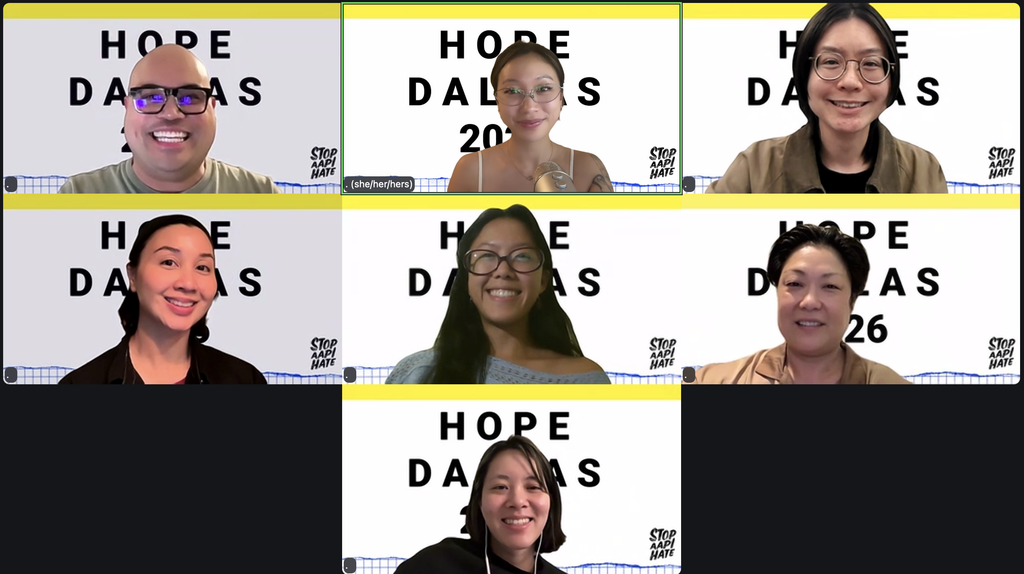
In 2026, we expanded beyond California, running three cohorts in Dallas, Texas, in partnership with the Dallas Asian American Historical Society.
- Community building and connection: Sharing their experience with others helped participants form personal connections and find strength in one another.
Just being in this space with all of you… it actually feels like a weight has been lifted from my shoulders because I know that I’m not alone.
– HOPE Participant 1
- Self-confidence: As a result of the program, participants found it easier to embrace their cultural identities and speak up for themselves.
I know more [about] how to help my kids, how to say my opinions. I was afraid before.
– HOPE Participant 2
“I guess my accent isn’t so bad… It’s okay for me to speak up.”
– HOPE Participant 3
- Collective action: Some participants took what they learned about self-care and collective action, and applied it in their everyday lives. They shared their stories with family and friends, spoke up more at school and work, and created [a collection/publication and a podcast] with friends.
[we] collectively have a focus and goal of combating AAPI bigotry and proactively focus on inspiring conversations that will continue to create waves of change.
– HOPE Participant 4
Bringing hope to more communities
Asian and Pacific Islander people continue to face alarmingly high levels of racism today, years after the height of the COVID-19 pandemic. That means radical healing remains a critical need for our communities. To meet this demand, we are exploring opportunities to expand the HOPE program beyond Los Angeles and Dallas to give more survivors a safe and supportive space to process and heal together.
Contact our Community Care team through our contact form to learn how your AAPI-serving organization can bring the HOPE program to your local communities.
Acknowledgements
The HOPE Program exists because of the partners, funders, and community members who built it with us.
We are grateful to AAPI Equity Alliance and to Dr. Anne Saw of DePaul University and her team, Dr. Grace Chen, Dr. Sherry Wang, and Dr. Andi Lee, for bringing the HOPE program to life.
The HOPE curriculum was developed through recruitment, focus groups, and feedback from five California partner organizations: Koreatown Youth + Community Center (KYCC), Little Tokyo Service Center (LTSC), Pacific Asian Counseling Services (PACS), Search to Involve Pilipino Americans (SIPA), and Asian Pacific Counseling and Treatment Centers (APCTC).
In Texas, the Dallas Asian American Historical Society (DAAHS) partnered with us to pilot HOPE in the Dallas area and recruited participants. Thanks to their extensive coordination and outreach, we were able to bring radical healing to a diverse range of AAPI communities.
We also extend our gratitude to California’s Stop the Hate Program, whose funding laid the groundwork for the HOPE program and the Robert Wood Johnson Foundation for supporting its growth and development.
Finally, we thank every participant who showed up, shared their stories, and helped us make the HOPE program what it is today.
Learn More

Report Anti-AA/PI Hate
If you see or experience an act of anti-AA/PI hate, take five minutes and submit a confidential report.
Community Resources
If you see or experience an act of anti-AA/PI hate, take five minutes and submit a confidential report.

The HOPE Program: Community Healing from Anti-Asian Racism