

With rising tensions between the U.S. and China, a growing number of state and federal lawmakers are using “national security concerns” to discriminate against Chinese immigrants without evidence of being a threat to our national security.
The most common example of this is the anti-Asian land ownership ban: a piece of anti-immigrant legislation that threatens to keep Chinese and other immigrants from buying homes and business properties in the U.S.
Over the last two years alone, more than 200 land ownership bans targeting Chinese immigrants were introduced in 39 states. This April, Georgia became one of them when Governor Brian Kemp signed SB 420, which has effectively banned immigrant and Asian communities from placing down roots and purchasing property in the state.
And just last month, Stop AAPI Hate, along with Asian Americans Advancing Justice – Atlanta, hosted a community roundtable discussion to discuss this new law. Community members, historical experts, and legal professionals gathered to discuss the dangers and implications of these alien land laws, their usage across U.S. history, and how we can come together to defeat them.
Key Takeaway #1: Anti-Asian land bans aren’t new — neither are their devastating consequences.
The recent wave of anti-Asian land bans is not the first. In fact, land ban legislation dates back all the way to the 17th century. Then and now, lawmakers used national security as an excuse to strip everyday people of their rights.
This is a brief timeline of past legislation that restricted property rights for Asian immigrants — preventing generations of families from buying homes and setting down roots:
1859: Oregon added provisions to its constitution that targeted Chinese immigrants, denying their rights to own land and vote.
1886: Washington passed legislation that prohibited immigrants ineligible for citizenship from owning property.
1913: California passed the first ever Alien Land Bill, banning Japanese immigrants from purchasing land.
1920s: Eleven other states all followed suit, enacting very similar anti-immigrant legislation.
It took decades for states to strike down and repeal this harmful legislation — at the expense of multiple generations of Asian Americans.
Florida was one of the last states to repeal their anti-Asian land law in 2018.
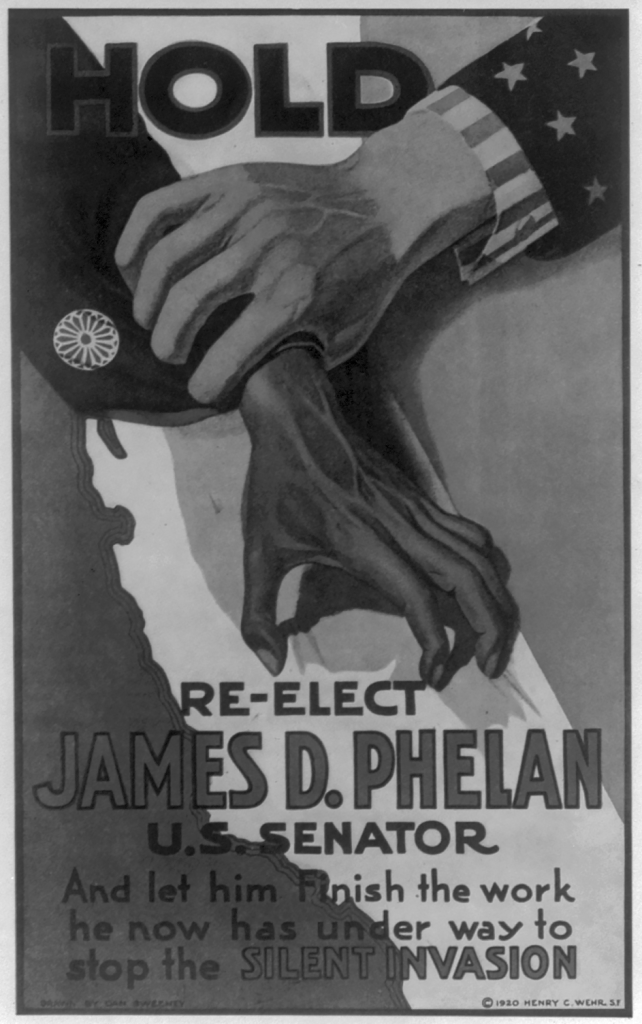
US Senators and Representatives used fear mongering to win elections. They claimed that Asian countries sent immigrants as part of a “silent invasion”
Key Takeaway #2: Anti-Asian land bans are written to spread fear and confusion.
Throughout history, alien land laws were crafted using vague language to fit whoever was the nation’s “enemy” at the time. In 1913, California’s Alien Land Law banned land ownership for “aliens ineligible for citizenship.” The federal Immigration Act of 1924 used similar wording, banning immigration by virtually all “aliens ineligible for citizenship.” These “aliens” were specifically Japanese immigrants.
Fast forward to present day Georgia, SB 420 penalizes real estate agents for selling to “foreign agents” — without defining what a “foreign agent” is, or what this law means for the Chinese, Iranian, and other immigrants. Without defining these terms, lawmakers have created a situation in which immigrants are left fearing for their property rights while real estate agents are incentivized to turn away Asian clients for fear of criminal charges.
As panelist Jamal Adbi said, this vague language is not an accident. It’s actually a part of a political tactic designed to drive fear and perpetuate discrimination and stereotypes among AA/PI communities, casting suspicion on all immigrant and Asian communities.
Key Takeaway #3: It’s important that we come together to build coalitions to fight back against these discriminatory policies.
Land bans don’t just affect Asian immigrants — they pose a threat to all marginalized groups and resisting them means building a multiracial coalition of not just Asian Americans and immigrants nationwide.
In Texas, Georgia, and Florida, thousands of Asian Americans, Iranian Americans, and other immigrant communities turned out in staggering numbers to circulate petitions, co-host rallies, support anti-land ban litigation, and — in Texas — defeat anti-Asian land bans before our communities get hurt.
And as the rising tide of racist, anti-immigrant legislation continues to swell, we have the chance to keep up the momentum by joining forces with immigrants and people of color nationwide to build a unified front against racial injustice.
Though the fate of SB 420 in Georgia is unknown, we remain committed to the fight against anti-Asian land bans and other forms of anti-Asian scapegoating.
For real time updates from Stop AAPI Hate and our Stop The Blame campaign, click here to subscribe to our e-newsletter.

Land bans: A looming threat to AA/PI & Immigrant communities
This year, Georgia passed a discriminatory alien land ban that targets Chinese immigrants and other immigrant communities. At a recent roundtable event, panelists confirmed that this practice isn’t new to the U.S. but part of a historical pattern of anti-Asian scapegoating.